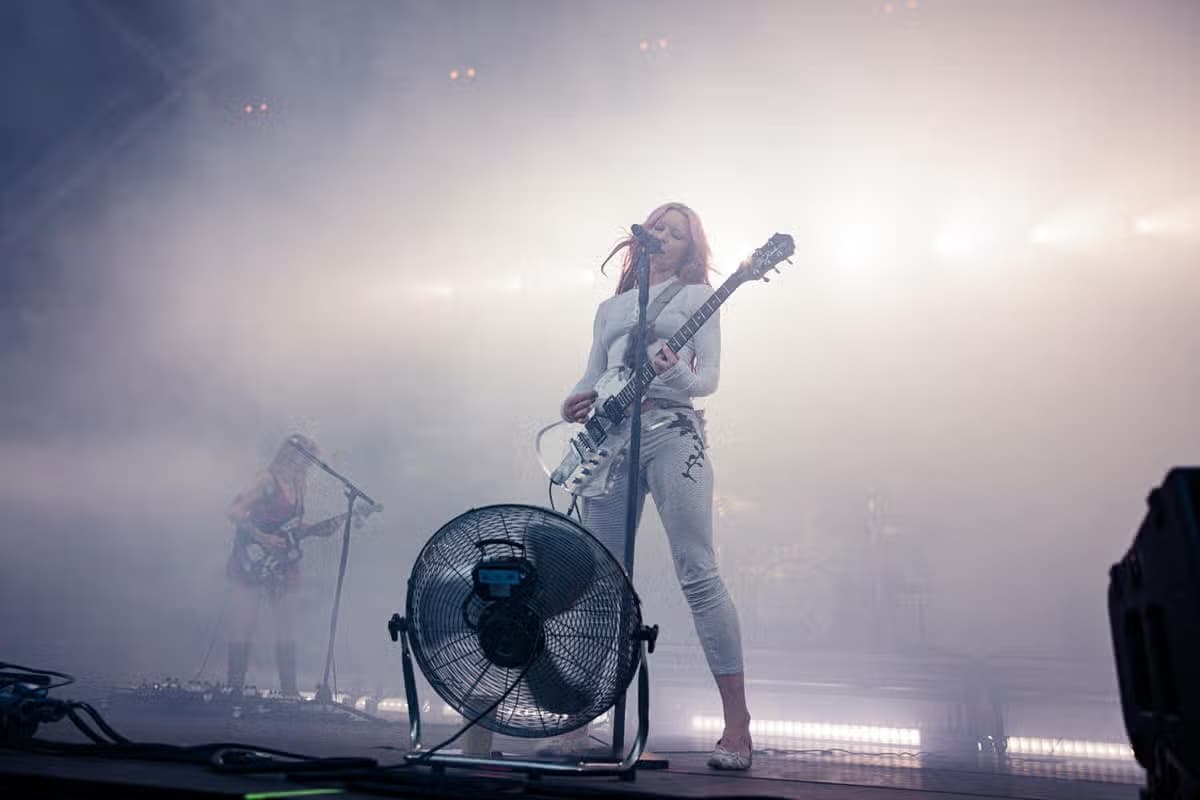
Wet Leg prove they're too big for cult status at Manchester's Castlefield Bowl
July 8th 2026
Story by Hannah Alcock
09/07/2026
There was a time when Wet Leg could slip onto a tiny Manchester stage almost unnoticed. Four years later, they're commanding 8,000 people at Castlefield Bowl, opening their biggest headline shows to date with the effortless confidence of a band that has long since outgrown indie's "next big thing" tag.
Support comes from Mercury Prize winners English Teacher, whose knotty, inventive post-punk proves a perfect curtain-raiser. Their set is fearless, veering between wiry art-rock and melodic left turns, while unreleased track Billboards hints that their next chapter could be even stronger than the last. When Wet Leg arrive, there's no grand spectacle or elaborate production—just five musicians who know exactly how good they are. They tear straight into catch these fists, immediately reminding everyone how much heavier and sharper moisturizer made them sound. Live, the newer material has real muscle, even if much of the audience is still waiting for the older favourites. That's the only slight disconnect on a warm Manchester evening. Castlefield Bowl's mixed crowd and frustratingly restrained sound levels mean some of the newer songs never quite ignite, while the debut-era hits land with undeniable force. Wet Dream, Oh No and the brilliantly juvenile Ur Mum trigger huge singalongs, before Angelica and the inevitable Chaise Longue transform the Bowl into one giant indie disco. One thing becomes obvious over the course of the set: Wet Leg don't waste time. Twenty songs disappear in little over an hour, each one seemingly ending just as it finds another gear. Conversation with the audience is minimal, the band preferring to let the songs do the talking. It keeps the momentum high, even if a little more interaction wouldn't have gone amiss. For anyone who remembers seeing Rhian Teasdale and Hester Chambers squeezing onto the stage at YES a few years ago, tonight feels quietly remarkable. The songs are bigger, the band tighter, and the venues considerably larger. If there's one takeaway from Wet Leg's Castlefield Bowl debut, it's that this ascent is far from over. Arena-sized crowds no longer feel like a question of if - but when.